1

The fairy babies — Story, Setting & Ideas
9
2
Project Gutenberg
2022
Children's stories; Fairies -- Juvenile fiction
Readers of public-domain and historical texts
Project Gutenberg digital edition
en
Edition facts
Words: 23,062
Reading time: 101 min
Text sections: 12
Source:
Project Gutenberg record #69075
In Laura Rountree Smith's 1924 story collection, twenty-five Ink-Bottle Babies emerge from an ink bottle, attend school, and encounter magic objects like a pitcher, spoon, and kites. The catalog subjects 'fairies' and 'children's stories' only partially capture the work's focus on classroom mishaps, family dynamics, and rhyming narratives.
Editorial Edition Score
4.8/5
★★★★★
★★★★★
Calculated from edition completeness, EPUB availability, text structure and catalogue metadata. Not a user rating.
Edition quality
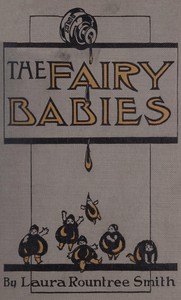
The twenty-five Ink-Bottle Babies who open Laura Rountree Smith's The Fairy Babies (1924) are introduced not as winged sprites but as literal ink-bottle inhabitants who tumble off desks and leave black footprints. The catalog subjects list 'Fairies -- Juvenile fiction' and 'Children's stories,' yet the excerpts show the babies attending school, reciting rhymes about September, and being scolded by a teacher. The magic elements—a pitcher, a spoon, kites—are objects that act independently, not fairy characters. This editorial note examines how the text's actual content relates to its catalog classification.
Ink-Bottle Babies vs. Fairies
The catalog subject 'Fairies -- Juvenile fiction' might lead a reader to expect traditional fairy lore, but the excerpts reveal a different emphasis. The Ink-Bottle Babies are described as coming 'out of a bottle of ink' and are small enough to roll off desks. They have a mother and father, go to school, and celebrate holidays like Thanksgiving and May-Day. The word 'fairy' appears in the title and in chapter headings like 'The Fairy Queen,' but the central characters are more akin to mischievous children than magical beings. The magic objects—a pitcher that tells fortunes, a spoon that stirs by itself—are the primary fantastic elements, not the babies themselves.
Rhyme, Repetition, and Classroom Structure
The text is structured around rhyming verses that characters sing or recite. For example, the Ink-Bottle Babies chant, 'We are so little, it is true, / The washing is very hard to do!' This pattern recurs throughout the excerpts, with the magic spoon also singing a warning: 'Whatever song you wish to sing, / Remember, ’tis the safest thing, / To put the spoon upon the shelf, / And keep the secret to yourself!' The narrative voice frequently addresses the reader with questions like 'What do you suppose happened next?' and uses repetition for emphasis. The school setting in Chapter I establishes a framework of rules and lessons, which contrasts with the chaotic behavior of the babies.
Family Dynamics and Domestic Magic
Despite the catalog subject 'Children's stories,' the excerpts emphasize family relationships. The Ink-Bottle Mamma rescues her baby from school, reads stories slowly, and tucks the babies into bed. The Ink-Bottle Papa returns after 'a year and a day' bearing twenty-five silver spoons as gifts. Magic objects like the spoon and pitcher are integrated into domestic routines—the spoon stirs a bowl, the pitcher is used for storytelling. The babies' adventures often end with a return to the family home, reinforcing a pattern of safety and parental authority. This domestic focus distinguishes the work from more adventurous fairy tales.
Readers approaching The Fairy Babies through its catalog subjects should adjust expectations: the 'fairies' are ink-bottle children, and the 'stories' are episodic, rhyme-filled vignettes centered on family and school. The magic is confined to a few objects, and the narrative voice is playful but instructive. This work is best understood as a early 20th-century domestic fantasy that uses repetition and verse to engage young readers.
Reader reflection
What did you think of this book?
Answer a few questions and save a private reflection on this device.
Your progress
0
/
10
2
What was your overall reaction to the book?
3
Is this a title you would suggest to others?
4
Did the language feel accessible?
5
How original did the book feel?
6
What was the strongest part of the book?
7
How closely did the book connect with your experience?
8
How well did it match your expectations?
9
In one sentence, what did you learn?
10