1

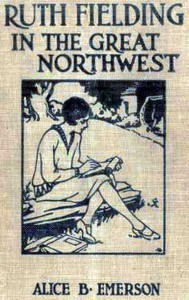
Ruth Fielding in the Great Northwest; Or, The Indian Girl Star of the Movies — Context and Discussion
5
1
Project Gutenberg
2005
Adventure and adventurers -- Juvenile fiction; Mystery and detective stories; Motion picture industry -- Juvenile fiction; Fielding, Ruth (Fictitious character) -- Juvenile fiction; Osage Indians -- Juvenile fiction
Readers of public-domain and historical texts
Project Gutenberg digital edition
en
Edition facts
Words: 46,884
Reading time: 204 min
Text sections: 5
Source:
Project Gutenberg record #15720
This editorial note examines the narrative voice and pacing in Alice B. Emerson's Ruth Fielding in the Great Northwest, focusing on how dialogue, descriptive passages, and chapter structure create tension and forward momentum.
Editorial Edition Score
4.7/5
★★★★★
★★★★★
Calculated from edition completeness, EPUB availability, text structure and catalogue metadata. Not a user rating.
Edition quality
The opening chapter, 'Ruth in Peril,' immediately establishes a contrast between mechanical precision and human vulnerability. The description of Helen Cameron's car—'tuned to perfection' with shock absorbers handling rough roads—suggests control, yet Ruth is soon in danger. This juxtaposition recurs throughout the excerpts, where polished dialogue about movie-making and tribal wealth is punctuated by threats from Dakota Joe. The narrative voice shifts between Ruth's eager idealism and Mr. Hammond's pragmatic caution, creating a layered perspective on the risks of their venture.
Dialogue as a Driver of Pace
In the excerpts, dialogue often accelerates the narrative. Ruth's indignant interruption—'He might have had me killed'—and Mr. Hammond's measured replies create a back-and-forth that mimics real-time argument. The exchange about Dakota Joe's demands moves quickly, with short sentences and interruptions: 'But what does he expect of you, Mr. Hammond?' asked Ruth in surprise. This rapid-fire conversation contrasts with longer descriptive passages, such as the initial car scene, where the prose lingers on sensory details like 'gray dust' and 'purring of the engine.' The alternation between these modes keeps the reader engaged while advancing the plot.
Voice and Character Through Word Choice
Ruth's voice is marked by enthusiasm and a moral certainty: 'I would not risk a cent with such a man.' Mr. Hammond, by contrast, uses cautious, reflective language: 'I will see that you are fully protected from him hereafter.' Wonota's speech is formal and precise, reflecting her background: 'It is apportioned to the families, and Totantora, the head of my family, is somewhere in that Europe where the war is.' The author uses these distinct registers to differentiate characters without relying on dialect or tags. The Osage maiden's careful syntax underscores her dignity and the cultural gap she navigates.
Structural Pacing: Chapters and Suspense
The chapter titles in the table of contents—'Ruth in Peril,' 'A Perfect Shot,' 'In the Ring'—promise immediate action, but the excerpts show that the narrative often delays payoff. The first chapter begins with a calm car ride before danger emerges. Later, Mr. Hammond's assurance that he will protect Ruth is undercut by the narrator: 'Mr. Hammond did not realize what a large undertaking that was to be.' This technique of foreshadowing through narrative asides creates a slow-burn tension. The pacing is further varied by the inclusion of background information, such as the Osage oil wealth, which is delivered in expository paragraphs that momentarily pause the action.
Readers may find it useful to track how Emerson balances Ruth's optimistic drive with the practical obstacles posed by Dakota Joe and the film industry. The excerpts suggest that the narrative's rhythm depends on the interplay between dialogue-heavy scenes and descriptive interludes. Pay attention to how the author uses chapter breaks to shift focus from immediate peril to broader context, a technique that sustains momentum across the book's twenty-five chapters.
Reader reflection
Take a moment to reflect on this book
Create a short personal record of your experience with this book.
Your progress
0
/
10
2
Was reading this book enjoyable?
3
Is this a title you would suggest to others?
4
How much effort did this book require?
5
How would you describe its reading pace?
6
Which part made the strongest impression?
7
How useful did the reading feel?
8
Did you relate to its people, ideas, or situations?
9
What changed or sharpened your thinking?
10