1

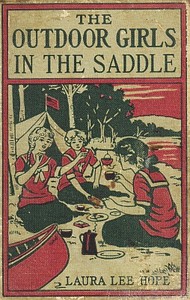
The Outdoor Girls in the Saddle; Or, The Girl Miner of Gold Run — Story, Setting & Ideas
8
2
Project Gutenberg
2006
Western stories; Adventure and adventurers -- Juvenile fiction; Girls -- Juvenile fiction; Girls -- Societies and clubs -- Juvenile fiction; Horses -- Juvenile fiction
Readers of public-domain and historical texts
Project Gutenberg digital edition
en
Edition facts
Words: 46,942
Reading time: 205 min
Text sections: 5
Source:
Project Gutenberg record #19318
An editorial note on Laura Lee Hope's 1922 adventure, focusing on the author's choices in diction, dialogue, and description as seen in the opening telephone scene, the characterization of Meggy Higgins, and the bond between girls and horses.
Editorial Edition Score
4.7/5
★★★★★
★★★★★
Calculated from edition completeness, EPUB availability, text structure and catalogue metadata. Not a user rating.
Edition quality
The novel opens not with a landscape or a crisis, but with a telephone call. Betty’s impatient jiggling of the receiver and her complaint about central establish a modern, domestic tone that contrasts sharply with the Western setting to come. The author uses colloquial exclamations—"Hello, hello!" and "Oh dear, oh dear!"—to signal a light, conversational voice. This choice immediately positions the Outdoor Girls as ordinary, spirited teenagers, not seasoned frontierswomen, making their later adventures in the saddle feel like a deliberate departure from the familiar.
Dialogue as Characterization
Hope relies heavily on dialogue to define her characters, often using interruptions and overlapping speech to convey energy. In the opening chapter, Betty’s rapid-fire questions and Mollie’s weary replies create a natural rhythm. The author also uses dialect sparingly but effectively: Meggy Higgins says "I reckon dad can get along one day without me" and "Pa's broke him in so he can be real helpful now." These touches mark Meggy as a mountain girl without resorting to caricature. The cowboys, too, have a distinct voice—"Some anymiles do have all the luck"—which adds authenticity to the ranch setting.
The Horse as Emotional Anchor
The bond between the girls and their horses is rendered through specific, concrete details. Mollie’s horse Old Nick is "skittish" with others but "gentle and docile" with her. Betty’s colt Nigger is described as a "darling little brown colt." The girls caress the animals, rub their noses, and call them "endearing names." Hope emphasizes that the horses follow the girls "like dogs," a simile that domesticates the wild. When the girls race to meet their returning horses after a landslide, the author writes they were "laughing and crying over them"—a moment of genuine emotion that grounds the adventure in affection.
Meggy Higgins and the Lure of Gold
Meggy’s desire for a horse is presented as a simple, poignant counterpoint to her father’s gold fever. Hope writes that "many have desired a fortune, some political fame, others social position, but Meggy merely desired a horse." The author contrasts the abstract "lure of gold" with the tangible, everyday hardship Meggy faces. When Mollie jokes about robbing a mine to plant gold in Meggy’s claim, Meggy responds with "grim philosophy": "I'm used to that." This restraint in dialogue—a single line carrying years of disappointment—shows Hope’s ability to convey character through understatement.
Description of Setting and Action
Hope’s descriptive passages are functional rather than ornate. The landslide is introduced abruptly: "A LANDSLIDE—AND THEY WERE DIRECTLY IN ITS PATH!" (the frontispiece caption). In the text, the storm and danger are conveyed through sound—"the regular beat of galloping horses in the distance"—and through the characters’ physical reactions: Betty springs to her feet, the girls race down steps. The author favors verbs of motion (sprang, raced, galloping) over static description. Even the cave and darkness are handled with brevity, keeping the focus on the girls’ actions and emotions.
Readers attentive to authorial craft will notice how Hope balances serial conventions—the Outdoor Girls series formula—with specific choices in voice and detail. The telephone opening, the restrained dialect, and the horses as emotional anchors all reward close reading. The excerpts suggest a narrative that values character interaction over landscape, and dialogue over exposition. For those interested in early twentieth-century girls’ adventure fiction, this entry offers a clear example of how Laura Lee Hope constructed a familiar yet distinct world.
Reader reflection
Take a moment to reflect on this book
Create a short personal record of your experience with this book.
Your progress
0
/
10
2
What was your overall reaction to the book?
3
How likely are you to recommend this book?
4
How demanding did the text feel?
5
How strong was your personal connection to the text?
6
How useful were the ideas in this book?
7
How clearly were the main ideas presented?
8
Did any part of the book stay with you emotionally?
9
Which lesson or insight stayed with you?
10