1

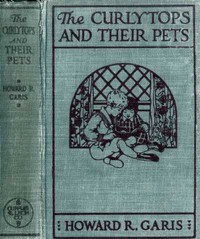
The Curlytops and Their Pets; Or, Uncle Toby's Strange Collection — Reading Companion
4
1
Project Gutenberg
2007
Dogs -- Juvenile fiction; Siblings -- Juvenile fiction; Parrots -- Juvenile fiction; Monkeys -- Juvenile fiction; Pets -- Juvenile fiction; Alligators -- Juvenile fiction; Reptiles -- Juvenile fiction
Readers of public-domain and historical texts
Project Gutenberg digital edition
en
Edition facts
Words: 50,795
Reading time: 221 min
Text sections: 6
Source:
Project Gutenberg record #21049
In this early 20th-century children's adventure, Teddy and Janet Martin—the Curlytops—receive a letter from Uncle Toby inviting them to see his strange collection of pets. The narrative follows their encounters with a parrot, monkey, dogs, and even an alligator, as they plan a pet circus. The text balances imaginative play with practical animal care advice.
Editorial Edition Score
4.7/5
★★★★★
★★★★★
Calculated from edition completeness, EPUB availability, text structure and catalogue metadata. Not a user rating.
Edition quality
The Curlytops and Their Pets opens with a scene of imaginative play: Teddy and Janet Martin are sailing toy ships in a brook, loading them with pretend cargoes of “swords and guns and gunpowder” and “oranges and lemons and pineapples.” Their game is interrupted when Teddy, eager to become a pirate, tips his vessel over. This moment establishes the siblings’ dynamic—Teddy impulsive and action-oriented, Janet more methodical—and sets the tone for a story where make-believe and real responsibilities intertwine. The arrival of Uncle Toby’s letter soon shifts the focus from pretend adventures to a genuine one: visiting his “strange collection” of pets.
Uncle Toby’s Letter and the Promise of Strange Pets
The catalyst for the children’s adventure is a letter from Uncle Toby, whose “strange collection” of animals is hinted at in the book’s subtitle. The opening chapter shows the Curlytops eagerly anticipating what they might see. The narrative voice, characteristic of Howard R. Garis’s series, blends colloquial dialogue with direct addresses to the reader. For instance, when Teddy spills his ship’s cargo, the text notes, “This would be easy enough, it seemed, as the children were only pretending.” Such asides gently remind the audience that the children’s world is one of make-believe, yet the pets they encounter—like the parrot Mr. Nip and the monkey Jack—are real and require care.
Pets with Personalities: Parrots, Monkeys, and Dogs
The excerpts showcase a vivid menagerie. The parrot Mr. Nip is given a distinctive voice: “I’m a crack-crack-cracker!” he shrieks, and he “whistles just like one of us fellows,” according to Teddy. The monkey Jack chatters “such as he must have learned in the jungle where he came from,” and the dogs Skyrocket and Top bark loudly when awakened. Each animal has a defined trait—Mr. Nip’s unpredictable talkativeness, Jack’s mimicry, the dogs’ alertness. These details are not merely decorative; they drive the plot as the children plan a pet circus and must train the animals. The text also includes a brief lesson on feeding pets properly, advising against overfeeding and emphasizing fresh water—a practical note woven into the fiction.
Planning the Circus: Training and Teamwork
By the later chapters, the Curlytops are deep in preparations for a pet circus. Teddy recruits friends like Jimmy, Jack Turton (slated as a clown), and Harry Kent. The children assign roles: Teddy and Jimmy as animal trainers, Janet as a handler unafraid of snakes. The narrative highlights the challenges of training unpredictable animals—Mr. Nip “doesn’t always talk or whistle when you want him to.” This tension between the children’s ambitions and the animals’ independent wills gives the story its forward momentum. The circus planning also reveals the siblings’ collaborative spirit: Teddy and Janet work together, and Teddy is careful not to overfeed the pets, showing a growing sense of responsibility.
Readers familiar with Howard R. Garis’s Curlytops series will recognize the blend of everyday childhood activities and gentle didacticism. The excerpts suggest a narrative that values both imaginative play and practical knowledge about animal care. As you read, pay attention to how the children’s plans for the circus evolve—and how the pets’ unpredictable behavior tests their patience and ingenuity. The story rewards attention to the small details of the animals’ habits and the children’s problem-solving.
Reader reflection
What was your reading experience?
Capture what you thought, learned, and would like to remember.
Your progress
0
/
10
2
How did the book work for you overall?
3
Would you pass this book on to a friend?
4
How much effort did this book require?
5
Did the book offer a fresh perspective?
6
Was the book moving at the right speed?
7
Did the book deliver what you hoped for?
8
Could you apply anything you learned?
9
What changed or sharpened your thinking?
10