1

Kitty-cat tales — Context and Discussion
19
4
Project Gutenberg
2025
Children's stories; Cats -- Juvenile fiction
Readers of public-domain and historical texts
Project Gutenberg digital edition
en
Edition facts
Words: 28,007
Reading time: 122 min
Text sections: 34
Source:
Project Gutenberg record #76176
A frame narrative in which a lonely girl named Dolly is comforted over nine nights by a black kitten named Impty, who tells traditional and original cat tales. The stories range from Puss-in-Boots to lesser-known French and folkloric yarns, with a focus on feline cleverness, loyalty, and peril.
Editorial Edition Score
4.8/5
★★★★★
★★★★★
Calculated from edition completeness, EPUB availability, text structure and catalogue metadata. Not a user rating.
Edition quality
The book opens not with a cat but with a child: Dolly, alone in her room after her parents have gone to her grandmother, feels the absence of a good-night kiss and a story. Her wish for her black kitten Impty is granted when he slips in and curls up beside her pillow, ready to tell tales. This frame—a storyteller cat soothing a lonely child—sets the tone for a collection that treats cats as both comforters and cunning protagonists.
Alice van Leer Carrick draws on European folklore, adapting stories such as "Puss-in-Boots" and "Dick Whittington and His Wonderful Cat" alongside less familiar ones like "Mother Michel and Her Cat." The language is direct and gently old-fashioned, with dialogue that often reveals character through politeness or menace.
Dolly and Impty: A Storyteller’s Frame
The frame story is brief but carefully drawn. Dolly’s loneliness is conveyed through small, concrete grievances: Miss Jane does not know “how a tight, lumpy braid of hair could get down your back at night.” Impty, described as a “black, black kitten” with a thin, curved tail that makes him look like “a witch’s cat,” is both a real pet and a gateway to fantasy. His yellow eyes seem to “understand everything.” Carrick uses this frame to justify the oral-tale structure: each night Impty tells a story, and Dolly’s reactions—fear, delight, curiosity—are implied but not dwelt upon. The frame itself is a story of comfort through narrative, and it gives the collection a cohesive emotional arc.
Clever Cats and Cruel Stewards
In “Mother Michel and Her Cat,” the cat Moumouth faces a sustained threat from the steward Lustucru, who tries to poison him and later enlists a boy named Faribole to help drown him in a sack. The excerpt shows Carrick’s skill at building tension through dialogue: Lustucru’s false kindness (“Make him love you, make him your friend”) contrasts with his savagery. Faribole’s reluctant complicity—he weeps as he leads Moumouth into the garden—adds moral weight. The story does not shy away from cruelty, but the cat’s refusal to eat poisoned patties shows a cleverness that anticipates his eventual escape. Carrick uses repeated motifs of food, trust, and betrayal that recur across several tales.
Diction and Dialogue: Politeness as a Weapon
Carrick’s characters often speak in formal, courteous phrases that mask danger. Lustucru addresses Faribole as “Monsieur” and “my lad” in the same breath. When Faribole begs for Moumouth’s life, Lustucru replies, “Take off the clothes I gave you, and go away instantly in these rags.” The contrast between the steward’s earlier flattery and his sudden cruelty is sharp. In other tales, cats speak with dignity: the King of the Field-Mice announces himself with “Know, then, that I am the King of all the Field-Mice.” This formal register gives the animal characters a gravity that elevates them above mere pets. Carrick’s dialogue thus serves both to advance plot and to define moral positions.
Visual Details and the Role of Illustrations
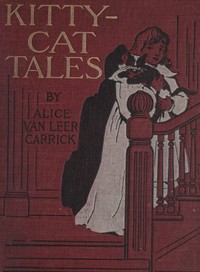
The book’s illustrations, by Bertha G. Davidson and Homer Eaton Keyes, are listed in the front matter with captions that hint at key scenes: “Impty curled himself up close to the pillow,” “The Prince mounted the hobby-horse,” “He opened the bag, and tossed Moumouth into the water.” These images likely reinforce the emotional beats of the stories—comfort, adventure, peril. Carrick’s prose is itself visual: she describes Impty’s “round, yellow eyes” and the “last sunset light trying to slip through” the shutters. The combination of text and image would have made the book a sensory experience for young readers, with the illustrations providing a concrete anchor for the fantastical elements.
Readers approaching Kitty-cat Tales should pay attention to the frame narrative’s quiet emotional logic: Dolly’s need for stories is as important as the stories themselves. The tales reward attention to dialogue and to the moral dilemmas faced by both humans and cats. Carrick’s choices in diction—formal, slightly archaic—give the collection a consistent voice that bridges folk tale and literary adaptation.
Reader reflection
Your personal reading reflection
Build a private reading journal entry for this title.
Your progress
0
/
10
2
Did this book hold your interest?
3
Would you encourage someone else to read it?
4
How easy was the book to follow?
5
How strongly did the book affect you emotionally?
6
What did you appreciate most?
7
Could you follow the author’s main argument?
8
Would you like to discuss this book with someone?
9
What did this book teach you most?
10