1

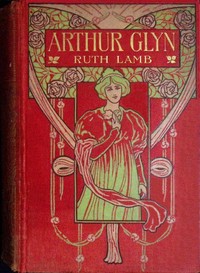
Arthur Glyn — Story, Setting & Ideas
19
2
Project Gutenberg
2023
Christian life -- Juvenile fiction; Children's stories; Christmas -- Juvenile fiction
Readers of public-domain and historical texts
Project Gutenberg digital edition
en
Edition facts
Words: 94,202
Reading time: 410 min
Text sections: 8
Source:
Project Gutenberg record #71907
Ruth Lamb's 1890 collection of seven Christmas-themed stories, including the title tale about a boy's gift, explores Christian charity and domestic trials through varied settings and characters, with a focus on moral lessons and emotional restraint.
Editorial Edition Score
4.8/5
★★★★★
★★★★★
Calculated from edition completeness, EPUB availability, text structure and catalogue metadata. Not a user rating.
Edition quality
The opening of the title story, 'Arthur Glyn's Christmas-Box,' immediately establishes a collective disappointment: 'Not a bit like Christmas.' The weather is wet and muddy, frustrating children who long for frost and snow. Lamb uses a series of vignettes—farmers' wives, the butcher, the grocer, the postman—to show a community united in grumbling. This communal voice, rather than a single protagonist's perspective, sets the tone for a collection that often prioritizes shared experience over individual psychology.
Christmas as a Setting for Moral Conflict
The catalog subjects list 'Christian life' and 'Christmas' as primary themes, and the excerpts bear this out, but not in a straightforwardly festive way. In 'Arthur Glyn's Christmas-Box,' the holiday serves as a backdrop for discontent: the weather is wrong, the children are bored, and the adults are preoccupied. Yet within this gloom, acts of charity emerge. Mrs. Austin, a widow grieving her daughter Dorothy, still arranges treats for the poor and a Christmas tree for other children. The story 'A Cuckoo in the Nest' introduces an orphan, Clare, whose arrival is framed as a 'Godsend' despite the nurse Barbara's 'croaking.' Lamb uses Christmas as a test of Christian virtue, where characters must overcome personal sorrow or inconvenience to help others.
Voice and Structure Across the Collection
The table of contents reveals seven stories, each divided into multiple chapters, suggesting a novella-like length for each. The excerpts show a consistent third-person narrator who moves between external description and interior reflection. In 'Arthur Glyn's Christmas-Box,' the narrator reports the boy's complaint that the weather consists of 'squash and splash,' a colloquial touch that contrasts with the more formal language of letters within the same story. The letter from Laura Allington, for instance, uses polite, measured prose: 'My promise will have been fulfilled when I have given the child into your care.' This juxtaposition of direct speech and epistolary form is a recurring structural device, as seen in the telegram that disrupts Mrs. Austin's plans.
Recurring Details and Thematic Threads
Several motifs appear across the excerpts. The weather—drizzle, mud, lack of snow—is a persistent presence, used to reflect mood and to create a contrast with the warmth of indoor charity. The Christmas tree appears as a symbol of secret preparation and hope: Margery notes that 'Mother' has a secret that makes her look different. The photograph of Clare, described as a 'true Godsend,' becomes a focal point for Mrs. Austin's decision. Lamb also uses the device of delayed revelation: Mrs. Austin's plan for Clare is kept from Margery, and the telegram arrives unexpectedly. These details suggest a narrative interest in suspense and emotional restraint, where characters' inner lives are revealed through small gestures rather than dramatic declarations.
Readers approaching this collection should expect a deliberate pace and a focus on moral development rather than action. The stories reward attention to the interplay between communal voices and individual dilemmas, and to the way Lamb uses seasonal details—weather, gifts, letters—to underscore themes of sacrifice and duty. The excerpts offer a consistent tone, but the full work may reveal greater variation across its seven narratives.
Reader reflection
Your personal reading reflection
Build a private reading journal entry for this title.
Your progress
0
/
10
2
How much did you enjoy the reading experience?
3
How likely are you to recommend this book?
4
How demanding did the text feel?
5
How valuable was this book for your own interests?
6
How well did it match your expectations?
7
How strongly did the book affect you emotionally?
8
How closely did the book connect with your experience?
9
What changed or sharpened your thinking?
10