1

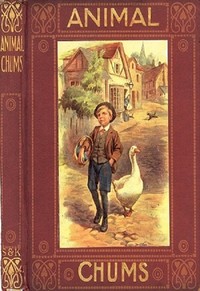
Animal Chums: True Tales about Four-footed Friends — Themes and Context
9
2
Project Gutenberg
2015
Children's stories, English; Animals -- Juvenile fiction
Readers of public-domain and historical texts
Project Gutenberg digital edition
en
Edition facts
Words: 11,296
Reading time: 50 min
Text sections: 13
Source:
Project Gutenberg record #50466
A collection of short stories framed by Uncle John's fireside tales, each featuring a distinct animal—goose, horse, weasel, rabbit—whose behavior drives the plot. The narrative moves between domestic interiors and rural landscapes, with recurring motifs of listening, watching, and sudden silence.
Editorial Edition Score
4.7/5
★★★★★
★★★★★
Calculated from edition completeness, EPUB availability, text structure and catalogue metadata. Not a user rating.
Edition quality
The book opens with a framing device: Uncle John tells stories to Willie and Tommy in their nursery each evening. This domestic setting recurs throughout, as many tales begin with children in a home or garden before moving to fields, farms, or woods. The narrator frequently addresses the reader directly (“Have you ever heard...?”), creating a conversational tone. The stories are presented as true, with Uncle John claiming to have seen the goose himself.
Framed by the Fireside
The collection is structured as a series of tales told by Uncle John to two boys, Willie and Tommy, in their nursery. This frame appears only in the first story, but its influence persists: the narrator often adopts a storyteller’s voice, using phrases like “I must begin at the beginning” and addressing the reader as “you.” The setting of the frame—a cozy room with a fire—contrasts with the outdoor adventures that follow, such as the rabbit’s flight from a weasel or the horse trotting to church alone. The frame establishes a pattern of listening: the boys listen to Uncle John, and within the tales, characters listen for sounds—a horse’s whinny, a rabbit’s scream, a fairy’s whisper. This emphasis on auditory cues ties the structure together, even when the frame is not explicitly mentioned.
Movement Between Inside and Outside
Each story shifts between interior and exterior spaces, often beginning with children in a house or garden and then moving to a wider landscape. In “John Willie,” Robbie and Mamie shout up the chimney at home, but the goose arrives in their yard. In “The Horse that went to Church,” the pony Bobbie is kept in a stable but escapes to the church. “The Weasel and the Rabbit” starts with Freda and Max at a farmhouse, then follows them to the riverbank and into the wood. These transitions are marked by sensory details: the warmth of fresh milk, the sparkle of sunshine on water, the sudden silence when a predator appears. The movement is not random; it often mirrors the animal’s own journey from safety to danger or duty. The horse’s journey to church is a deliberate act, while the rabbit’s flight is desperate. The settings are specific—a country village, a river, a farm—but never named, keeping the focus on the animal’s experience.
Recurring Images of Watching and Waiting
Several stories feature characters who watch animals intently, creating moments of stillness. In “The Weasel and the Rabbit,” the family sits on the grass and watches the river, then “the whole world had stopped moving” as a rabbit appears in pain. Uncle Jim says “Hush!” and they all watch the weasel creep along. Similarly, in “The Horse that went to Church,” the girls watch from the window as Bobbie jumps over the stable door. The narrator often describes animals listening: Don the sheep-dog sits with “ears pricked up and his head on one side, listening” at a rabbit hole. This pattern of watching and listening builds tension, especially when the outcome is uncertain. The weasel’s hunt ends with a scream, but the horse’s journey ends peacefully. The images are simple but effective, relying on the reader’s empathy for the animal.
The Role of Sound and Silence
Sound is a crucial structural element. Stories begin with dialogue or exclamations (“Hurrah! hurrah!”), then introduce natural sounds: birds singing, trout leaping, a horse whinnying. Silence marks a turning point. In “The Weasel and the Rabbit,” the birds cease singing and “all was silent” just before the rabbit appears. The scream that follows is the climax. In “John Willie,” the children shout up the chimney, and the fairy listens “all the time.” The horse story ends with Bobbie returning home “no doubt feeling that he had done his duty,” a quiet resolution. The narrator uses sound to guide the reader’s attention, from the noise of children’s play to the hush of a hunt. This technique makes the stories feel immediate, as if the reader is present, hearing what the characters hear.
The stories in Animal Chums reward a reader who pays attention to what is heard as much as what is seen. The frame of Uncle John’s storytelling invites a listening posture, and the tales themselves are built around moments of acute auditory awareness—a horse’s whinny, a rabbit’s scream, a fairy’s silent listening. Readers may notice how the author uses sound to mark shifts in mood and setting, from the chatter of children to the stillness of a woodland hunt.
Reader reflection
How did this book work for you?
Your answers remain private and are stored only in this browser.
Your progress
0
/
10
2
What was your overall reaction to the book?
3
Is this a title you would suggest to others?
4
How demanding did the text feel?
5
Did the book meet your expectations?
6
Is this a title worth rereading?
7
Did any part of the book stay with you emotionally?
8
Would you like to discuss this book with someone?
9
In one sentence, what did you learn?
10