1

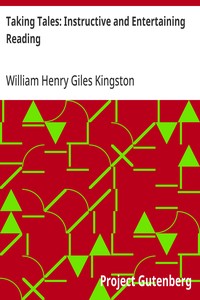
Taking Tales: Instructive and Entertaining Reading — Story, Setting & Ideas
11
2
Project Gutenberg
2007
Orphans -- Juvenile fiction; Voyages and travels -- Juvenile fiction; Seafaring life -- Juvenile fiction; Great Britain. Royal Navy -- Juvenile fiction; Shipwrecks -- Juvenile fiction; Missing children -- Juvenile fiction; Fishers -- England -- Juvenile fiction; England -- Social conditions -- 19th century -- Juvenile fiction
Readers of public-domain and historical texts
Project Gutenberg digital edition
en
Edition facts
Words: 106,172
Reading time: 462 min
Text sections: 10
Source:
Project Gutenberg record #23577
W.H.G. Kingston's collection of ten tales shifts between moral fables, nautical adventures, and military life, using direct address and varied pacing to instruct young readers on self-reliance, duty, and faith.
Editorial Edition Score
4.9/5
★★★★★
★★★★★
Calculated from edition completeness, EPUB availability, text structure and catalogue metadata. Not a user rating.
Edition quality
Kingston opens "The Miller of Hillbrook" with a mechanical analogy: mills require water, wind, or steam to function, just as people require mutual help. This plain, homiletic voice—complete with a moralizing rhyme—sets the tone for a collection that blends instruction with incident. The miller's complaint that "the wind is sure to drop when I have most grist to grind" reveals a character whose self-pity drives the plot. Elsewhere, the narrative shifts abruptly into a recruiting scene: a boy measures five feet six and three-quarter inches, is pronounced "all right," and within days is marching to Manchester. The contrast between the village setting and the barracks' rigid routine—beds folded to exact size, orderly-sergeants inspecting—shows Kingston's range in pacing and subject matter.
From Windmill to Barracks: Shifts in Setting and Pace
The collection's first tale lingers over Hillbrook's geography—the brook, the mill, the cottages—and the miller's grievances. Paragraphs are unhurried, filled with explanatory asides about water quality and neighbourly duty. Then, without warning, the narrative jumps to a recruiting officer's examination: "That will do, my boy; you can go." The pace accelerates. The recruit's journey to Manchester, the bugle calls, the folding of bedding, and the sergeant's suspicion that the boy has drilled before all unfold in brisk, factual sentences. Kingston uses this change in tempo to mirror the protagonist's transition from rural stability to military discipline. The reader, like the recruit, is thrust into a new world where every action is timed and inspected.
Direct Address and the Moral Framework
Kingston frequently breaks the fourth wall, speaking directly to his young audience. In the opening pages he writes, "Yes, young or old, rich or poor, must all help each other." This technique turns each tale into a spoken lesson. The narrator explains the mechanics of mills not for their own sake but to draw a moral: a man who refuses help "will soon find that he too has to come to a standstill." The religious underpinning is explicit—"He came to die, because all men have sinned"—yet the instruction is woven into concrete examples: the miller's complaints, the recruit's obedience. The voice is that of a patient schoolmaster, using repetition and simple contrasts to drive home points about interdependence and duty.
Recurring Details: Measurement, Routine, and the Body
Throughout the excerpts, Kingston fixates on precise measurements and bodily compliance. The recruit is measured to the quarter-inch; the bedding is folded into three parts; the forage-cap and stock are placed exactly. The orderly-sergeant pulls apart any bed not "done up properly." This attention to physical order reflects a broader theme: the body must be trained and regulated. In the miller's tale, the body is vulnerable to fever despite clean cottages—"no one could tell how it was." The juxtaposition suggests that external order cannot guarantee health or happiness. Kingston's narrative eye lingers on the material details of work and discipline, grounding his moral lessons in the tangible world of inches, rations, and bugle calls.
Readers will find that Kingston's tales reward attention to their structural variety: a leisurely fable may give way to a terse military episode without warning. The author's habit of addressing the reader directly and his focus on physical detail—measurements, routines, the workings of a mill—create a distinctive texture that is both instructive and concrete. Approach the collection as a series of discrete lessons in conduct, each anchored in a specific setting and paced accordingly.
Reader reflection
How will you remember this book?
Save your reaction, strongest insight, and memorable passage.
Your progress
0
/
10
2
Was reading this book enjoyable?
3
How likely are you to recommend this book?
4
Did the language feel accessible?
5
Would this book work well in a reading group?
6
Which aspect of the book did you value most?
7
Did the book deliver what you hoped for?
8
Would a second reading be valuable?
9
What changed or sharpened your thinking?
10