1

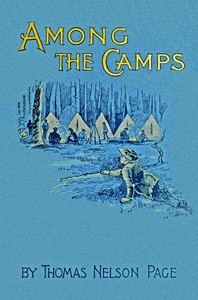
Among the camps — Context and Discussion
29
7
Project Gutenberg
2025
Children's stories, American; United States -- History -- Civil War, 1861-1865 -- Juvenile fiction
Readers of public-domain and historical texts
Project Gutenberg digital edition
en
Edition facts
Words: 39,454
Reading time: 172 min
Text sections: 9
Source:
Project Gutenberg record #75553
Thomas Nelson Page's 1891 collection of Civil War stories for young readers, set in the wartime and postwar South. The narratives shift between nostalgic antebellum scenes, tense occupation episodes, and moments of reconciliation, with a narrative voice that moves from affectionate description to dramatic action.
Editorial Edition Score
4.7/5
★★★★★
★★★★★
Calculated from edition completeness, EPUB availability, text structure and catalogue metadata. Not a user rating.
Edition quality
Page opens “A Captured Santa Claus” with a leisurely, sensory description of Christmas morning at Holly Hill before the war—children “like so many little white mice,” the patter of feet, the raking of hickory embers. This warm, detailed voice establishes a lost world of plenty. But the story pivots sharply: “Thus it was, that at Christmas 1863, when there were no new toys to be had for love or money, there were much disappointment and some murmurs.” The contrast between the remembered abundance and the war’s scarcity is drawn without commentary, letting the shift in material conditions speak for itself.
Voice and the Weight of Nostalgia
Page’s narrative voice in the opening pages is unhurried and affectionate, dwelling on domestic rituals and the children’s excitement. The prose is rich with simile and sensory detail—the children’s “little squeakings and gurglings,” the “gray light” of early morning. This voice is not neutral; it carries a clear longing for the antebellum order. When the war intrudes, the tone does not become bitter or polemical. Instead, the narrator reports the absence of merriment with a quiet, almost matter-of-fact sadness. The effect is to make the reader feel the loss through the texture of the prose itself, without explicit editorializing. Page’s choice to begin with a full, loving description of a vanished Christmas before introducing the war’s deprivations establishes nostalgia as a structuring emotion, not just a theme.
Pace Shifts: From Still Life to Action
The stories in Among the Camps do not maintain a uniform pace. The opening of “A Captured Santa Claus” moves slowly, building a static, almost tableau-like picture of family life. Then, with the arrival of the war, the pace quickens. In later excerpts, the narrative shifts to brisk, scene-by-scene action: a confrontation at a gate, a letter dropped into a box, a child running to be kissed. The sentence structure becomes shorter, more clipped. For instance, when Nancy Pansy’s sister thanks Captain Adams, the dialogue is direct and the description of Adams’s reaction is compressed: “He stammered something about not having done anything at all worthy of thanks.” This acceleration mirrors the characters’ own adjustment to wartime urgency. The reader moves from the unhurried rhythms of plantation life to the staccato beats of occupation and negotiation.
Recurring Details: The Doll Harry as a Narrative Anchor
One recurring object—the doll named Harry—appears across multiple excerpts, serving as a tangible link between episodes. In the first excerpt, Harry is a toy, “as fully restored as her shattered state would admit of.” Later, Nancy Pansy clasps Harry “closely to Her Bosom,” and the doll is present during the encounter with Captain Adams. The doll is not merely a prop; it is a marker of the child’s world persisting amid adult conflict. Page uses Harry to signal continuity and vulnerability. When Adams places the doll in Nancy Pansy’s hands, the gesture bridges the gap between soldier and child, Union and Confederate. The doll’s repeated appearance, always described with a specific condition (“scarred,” “shattered”), gives the narrative a concrete, emotional through-line that the broader war story lacks.
Because the excerpts cover only the first story and a later episode, the collection’s full range of narrative strategies remains partly hidden. Readers should attend to how Page modulates his voice between stories—whether the nostalgic tone of the opening persists or gives way to other registers. The doll Harry and the character of Nancy Pansy may recur as connective tissue; tracking their appearances can reveal how Page structures the book as a sequence rather than a set of independent tales.
Reader reflection
What did you think of this book?
Answer a few questions and save a private reflection on this device.
Your progress
0
/
10
2
What was your overall reaction to the book?
3
Would you encourage someone else to read it?
4
How demanding did the text feel?
5
How would you rate its originality?
6
How clear did the writing feel?
7
Is this a title worth rereading?
8
Which aspect of the book did you value most?
9
What changed or sharpened your thinking?
10