1

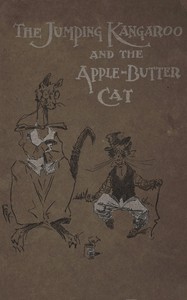
The jumping kangaroo and the apple butter cat — Edition Insights
9
1
Project Gutenberg
2022
Animals -- Juvenile fiction; Children's stories
Readers of public-domain and historical texts
Project Gutenberg digital edition
en
Edition facts
Words: 16,621
Reading time: 73 min
Text sections: 14
Source:
Project Gutenberg record #69117
This editorial note examines how the opening, middle, and later excerpts of John W. Harrington's 1900 children's story guide a first reading, focusing on the competitive challenge between Kerchug the leap frog and Jumping Jehosophat, the whimsical circus chapter, and the narrative's playful structure.
Editorial Edition Score
4.7/5
★★★★★
★★★★★
Calculated from edition completeness, EPUB availability, text structure and catalogue metadata. Not a user rating.
Edition quality
The story opens with Kerchug the leap frog boasting about his jumping abilities to the birds, who sing a song in his praise. This self-congratulatory routine is disrupted when Carrier Pigeon delivers a letter from a challenger named Jumping Jehosophat, who claims to leap better than any speckled-skinned creature. The letter's formal tone contrasts with the playful setting, and Kerchug's damp goggles provide a humorous excuse for having the letter read aloud. This opening establishes a pattern of competitive encounters and introduces the motif of written communication within the animal community.
The Challenge and the Letter
The first chapter, “Jumping Jehosophat,” immediately sets up a conflict through a written challenge. Carrier Pigeon acts as a mail carrier, delivering a note that Kerchug cannot read due to his wet goggles. The challenger's name, “Jumping Jehosophat,” echoes the biblical exclamation, adding a playful tone. The letter's phrasing—“I can leap further and higher and better than anything which wears a speckled skin and goggles”—directly targets Kerchug's identity. This device of using letters to advance the plot recurs throughout the book, as seen in later chapters like “Gray Mouse’s Rich Brother.” Readers should note how the narrative relies on written messages to introduce new characters and conflicts.
The Circus as a Set Piece
Chapter VIII, “At the Church Mouse’s Circus,” showcases the book's fondness for elaborate, humorous set pieces. The circus features makeshift animals: Field Mouse dressed as a tiger, Mole as an elephant, and White Rabbit as a lion with wool around his neck. The glow worms provide lighting in exchange for free admission. The chapter includes a riddle from Leap Frog—“When is a mouse when it is spinning?”—with the answer “a paper of tacks,” a pun that delights the audience. The climax involves Salamander eating fire, only to be stung by Wasp, causing a fire that burns the tent. This sequence demonstrates the author's use of absurdity and wordplay to create comedy.
Recurring Characters and Their Traits
The excerpts introduce a cast of animals with distinct roles: Kerchug the boastful leap frog, Carrier Pigeon the solemn messenger, and Church Mouse the ambitious ringmaster. The table of contents lists further characters like Yellow Lion, Hedge Hog, Ant’s Aunt, and Ugly Dog, suggesting a community where each animal has a specific function or story. For instance, “White Rabbit’s Cheese Scruple” hints at a moral dilemma, while “Hoot Owl Invents Golf” introduces invention. The narrative voice often includes direct speech and songs, such as the birds' song about Kerchug's jumping. Readers should pay attention to how each character's personality is established through their actions and dialogue.
Narrative Structure and Pacing
The book is divided into twelve chapters, each with a title that hints at a self-contained episode. The excerpts show a pattern: a problem arises (a challenge, a circus performance), characters react with humor or ingenuity, and the situation resolves often with a twist (the circus burns down). The pacing is brisk, with dialogue carrying much of the action. The author uses repetition for effect, such as the birds' song and the audience's refrain “Isn’t this a very fine show, indeed?” This structure suggests that the book can be read as a series of adventures rather than a single plot. The final chapters, like “How Ugly Dog Stopped the Car,” indicate a shift toward modern settings.
For a first reading, focus on how each chapter introduces a new animal and a new predicament, often resolved through cleverness or accident. The book rewards attention to wordplay and the recurring motif of written messages. The illustrations by J. M. Condé, though not included here, likely complement the whimsical tone. Approach the text as a collection of interconnected stories rather than a linear narrative, and enjoy the author's inventive use of animal characters to explore themes of competition, community, and humor.
Reader reflection
How did this book work for you?
Your answers remain private and are stored only in this browser.
Your progress
0
/
10
2
What was your overall reaction to the book?
3
Is this a title you would suggest to others?
4
Did the language feel accessible?
5
Was the book moving at the right speed?
6
Did any part of the book stay with you emotionally?
7
Did anything about the book feel genuinely new?
8
How useful did the reading feel?
9
What changed or sharpened your thinking?
10