1

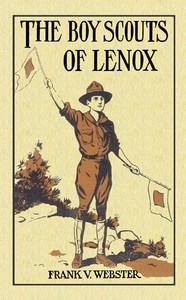
The Boy Scouts of Lenox; Or, The Hike Over Big Bear Mountain — Context and Discussion
7
1
Project Gutenberg
2007
Hiking -- Juvenile fiction; Boy Scouts -- Juvenile fiction; Mystery and detective stories; Mountains -- Juvenile fiction; Boy Scouts of America -- Juvenile fiction; Thieves -- Juvenile fiction
Readers of public-domain and historical texts
Project Gutenberg digital edition
en
Edition facts
Words: 50,938
Reading time: 222 min
Text sections: 5
Source:
Project Gutenberg record #21842
This editorial note examines the language, narrative voice, and pacing in Frank V. Webster's 1915 Boy Scouts novel, focusing on dialogue patterns, dialect use, and the alternation between action and exposition.
Editorial Edition Score
4.7/5
★★★★★
★★★★★
Calculated from edition completeness, EPUB availability, text structure and catalogue metadata. Not a user rating.
Edition quality
The novel opens with a flurry of colloquial dialogue: “I move we go into it, fellows!” and “It strikes me as a cracking good idea.” These lines establish a collective, enthusiastic voice among the Lenox boys, with each speaker distinguished by phrasing—Josh’s “keep the ball rolling” versus Felix’s more measured “I say the same.” Webster uses this rapid-fire exchange to introduce the scout-forming premise without authorial summary, letting character voices drive the exposition.
Throughout the excerpts, the narrative voice shifts between the boys’ informal speech and a more formal, descriptive register for scenes of instruction or emotion. The scout master’s persuasive talk is rendered in reported summary (“he talked about the value of scout training”), while the farmer Mr. Brush’s grief is dramatized through dialect: “Jest a year too late, sir!” This contrast in linguistic texture creates a rhythm of intimacy and distance.
Dialect as Character Marker
Webster assigns distinct speech patterns to differentiate characters. Mr. Brush, the farmer, uses nonstandard grammar and contractions: “cain’t,” “ye,” “arter,” “kim.” His dialogue is peppered with emotional interjections (“it’s hard, hard!”) and physical gestures (“brought down his ponderous fist on his knee”). In contrast, the boys speak in a more standard but still informal American English, with occasional slang like “crackerjack” and “heap glad.” The scout master, Mr. Witherspoon, employs a polished, persuasive tone, described by Josh as “a pretty good civil engineer” but “a crackerjack of a lawyer or a preacher.” This tripartite linguistic stratification—rustic, boyish, authoritative—serves to quickly establish social roles and emotional stakes without lengthy description.
Pacing Through Dialogue and Summary
The narrative alternates between brisk, dialogue-heavy scenes and slower, expository passages. The opening chapter moves rapidly through a series of short speeches, each line advancing the plot (the decision to form a troop). Later, the campfire scene with Mr. Brush slows the pace: dialogue is interspersed with narrative commentary (“Long they sat there talking”) and physical description (“his face working”). Webster also uses summary to compress time, as when Tom Chesney’s log-keeping is mentioned in passing. The chapter titles themselves signal shifts in tempo: “Setting the Trap” suggests action, while “The Man Who Loved Nature” implies reflection. This structural variety prevents monotony in a 50,000-word adventure.
Recurring Details and Their Narrative Function
Several concrete details recur across the excerpts, linking scenes. The hemlock browse pillow—a cotton bag filled with evergreen sprigs—appears in Chapter XIV as a practical lesson for tenderfeet. Earlier, the farmer’s dogs and motor car are mentioned in passing, grounding the rural setting. The “light o’ yer fire” that draws Mr. Brush to the scouts’ camp is a small but effective motif of visibility and community. These details are not merely decorative; they serve as anchors for the reader, creating continuity between the instructional and dramatic portions of the narrative. Webster’s voice remains consistently matter-of-fact, even in emotional moments, which lends a documentary quality to the fiction.
Readers attentive to shifts in register will notice how Webster modulates his prose to match the scene’s demands—colloquial for camaraderie, formal for instruction, and dialect for pathos. The novel’s language rewards a slow reading that listens for these changes, particularly in the contrast between the boys’ eager chatter and the farmer’s heavy grief. The excerpts suggest a work that values both action and sentiment, held together by a narrator who steps back to let his characters speak.
Reader reflection
How did this book work for you?
Your answers remain private and are stored only in this browser.
Your progress
0
/
10
2
How did the book work for you overall?
3
How likely are you to recommend this book?
4
How demanding did the text feel?
5
How distinctive were its ideas or approach?
6
How useful did the reading feel?
7
Was the book what you thought it would be?
8
How strong was your personal connection to the text?
9
What did this book teach you most?
10