1

The Big Nightcap Letters Being the Fifth Book of the Series — Key Ideas to Explore
13
3
Project Gutenberg
2009
Christian life -- Juvenile fiction; Conduct of life -- Juvenile fiction; Children's stories
Readers of public-domain and historical texts
Project Gutenberg digital edition
en
Edition facts
Words: 24,344
Reading time: 106 min
Text sections: 4
Source:
Project Gutenberg record #29813
Aunt Fanny's fifth Nightcap book uses a framing device of letters read aloud to children, blending moral instruction with domestic scenes. The excerpts show stories about a blind girl gaining sight and a boy overcoming ill temper, with the narrator directly addressing child readers and modeling Christian virtues through family interactions.
Editorial Edition Score
4.6/5
★★★★★
★★★★★
Calculated from edition completeness, EPUB availability, text structure and catalogue metadata. Not a user rating.
Edition quality
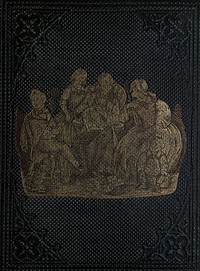
The Big Nightcap Letters opens not with a story but with a scene of children settling down for their 'nightcaps'—the family term for bedtime stories. The little mother produces a letter from Aunt Fanny, establishing a frame narrative where each tale is a letter addressed to a specific child. This structure allows the author to speak directly to readers, as when she addresses George: 'You know you are now nearly seventeen years old, and quite a patriarch in the Nightcap family.' The preface explicitly states the aim to teach goodness 'by combining the gay with the grave,' and the excerpts bear this out: serious afflictions like blindness and scarlet fever are handled with sentiment and resolved through prayer or medical intervention.
A Framing Device of Letters and Family Ritual
The book's title refers to letters, but the excerpts show that the stories are embedded in a domestic ritual. Each evening, the children gather after playing with 'Crocus the cat and the tremendous dog,' and the mother reads a letter from Aunt Fanny. The children interrupt with comments: George whispers to Anna, Harry cries out, and Clara speaks 'in a low voice.' This creates a layered narrative where the reader observes both the story and the listeners' reactions. The mother's voice mediates the moral lessons, as when she tells Harry, 'God knows best,' after a story about blindness. The frame also allows for direct address to the child named in each letter, making the moral instruction feel personal.
Moral Lessons Embedded in Physical Affliction
Two of the excerpted stories center on children with physical challenges. 'Poor Rich Little Eva' is a blind girl who regains her sight after an operation; the climax has her cousin Ruth screaming, 'She will see! she will see!' The children listening 'very nearly screamed, too.' In 'Ill Temper,' George recalls being 'very cross' after scarlet fever, and his mother says 'somebody else must have jumped into my skin.' The stories use these afflictions to teach gratitude and self-control. Lame Charley, a recurring character, is described as having 'more suffering and sorrow than any of us,' yet he loves God. The excerpts do not reveal whether Charley is cured, but his role as a moral touchstone is clear.
Dialect and Voice in the Excerpted Narratives
The author employs dialect for some characters, as when the nurse Binah says, 'God bress de good massa dat gib de sight to my little missis. It don't make no sort of difference to she, case old Binah black.' This representation of African American speech is typical of the period but stands out against the formal, sentimental tone of the frame. The children's own voices are colloquial: Harry says 'Dear me,' and George interrupts with 'Oh, yes.' The letters themselves are written in a direct, conversational style, with Aunt Fanny addressing each child by name. The preface notes that the author 'invariably omitted all the latter portions of the story-books' as a child, so she aims to keep the 'gay' alongside the 'grave' to hold young readers' attention.
Readers approaching The Big Nightcap Letters should expect a hybrid form: part story collection, part moral catechism, part family chronicle. The excerpts suggest that the emotional weight falls on moments of crisis and recovery, with the children's reactions reinforcing the lessons. The frame narrative rewards reading the letters in sequence, as the listeners' personalities emerge through their interruptions. The book's value lies less in plot than in its depiction of how a mid-19th-century household used storytelling to shape character.
Reader reflection
What did you think of this book?
Answer a few questions and save a private reflection on this device.
Your progress
0
/
10
2
How did the book work for you overall?
3
Is this a title you would suggest to others?
4
How demanding did the text feel?
5
Did you gain anything practical from the text?
6
Do you expect to return to this book?
7
How strong was your personal connection to the text?
8
Did any part of the book stay with you emotionally?
9
What changed or sharpened your thinking?
10