1

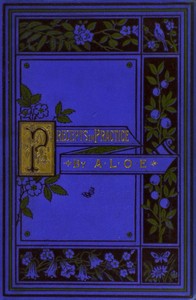
Precepts in Practice; or, Stories Illustrating the Proverbs — Text and Context
7
1
Project Gutenberg
2019
Christian life -- Juvenile fiction; Children's stories; Bible. Proverbs -- Juvenile fiction
Readers of public-domain and historical texts
Project Gutenberg digital edition
en
Edition facts
Words: 48,658
Reading time: 212 min
Text sections: 19
Source:
Project Gutenberg record #58791
A collection of fifteen stories, each illustrating a specific proverb from the Book of Proverbs, focusing on moral choices and their consequences through domestic and community settings.
Editorial Edition Score
4.8/5
★★★★★
★★★★★
Calculated from edition completeness, EPUB availability, text structure and catalogue metadata. Not a user rating.
Edition quality
The fifteen stories in this collection are each anchored to a specific verse from the Book of Proverbs, which appears as an epigraph and is then dramatized through the narrative. The structure is consistent: a proverb is stated, a tale unfolds, and the connection is made explicit, often through a character's reflection or a narrator's comment. For instance, in the first story, 'The Two Sons,' the proverb 'A wise son maketh a glad father: but a foolish man despiseth his mother' (Prov. 15:20) is illustrated through the contrasting fates of two brothers. The narrative moves between domestic interiors—a sickroom, a study, a garden—and uses objects like a sealed letter or scattered bills to advance the plot. Recurring images of chains, thorns, and snares reinforce the moral stakes, while the setting shifts between wealthy homes and humble cottages, emphasizing the universality of the proverbs' application.
Epigraphs as Structural Anchors
Each chapter opens with a proverb from the Book of Proverbs, printed in full and followed by the narrative. This epigraph is not decorative; it functions as a thesis statement that the story then proves through action and consequence. In 'The Two Sons,' the proverb about wisdom and foolishness is immediately tested by the behavior of Philip and his brother. The story does not simply illustrate the proverb but explores its nuances: Philip's initial disregard for his mother leads to a near-fatal accident, while his brother's care brings reconciliation. The epigraphs thus serve as a moral compass, guiding the reader's interpretation of events. The author, A. L. O. E., explicitly states in the preface that she aims to 'exemplify some truth taught by the wise King Solomon,' and the structure of each story mirrors this didactic purpose. The epigraphs also create a rhythm, as the reader anticipates how the proverb will be embodied in the tale.
Movement Between Domestic Spaces
The narratives frequently shift between contrasting domestic settings—from a wealthy drawing-room to a humble cottage, from a sickroom to a garden. These movements are not arbitrary; they underscore the moral and emotional states of the characters. In 'The Two Sons,' the action moves from the 'clear, cold morning' outdoors to the 'sickroom' where Philip lies injured, then to the 'study' where Sir Gilbert confronts his financial ruin, and finally to the garden where the brother waits for a reply. Each space carries symbolic weight: the study is cluttered with 'bills and papers' representing worldly troubles, while the garden becomes a place of reconciliation. Similarly, in other stories, the threshold between home and outside world marks a boundary between safety and temptation. The author uses these spatial transitions to highlight moments of decision or revelation, often pairing a physical movement with a moral turning point.
Recurring Images of Chains and Snares
Throughout the excerpts, images of physical and metaphorical binding recur. In 'The Two Sons,' the narrator describes 'the chain by which her son had been gradually drawn down towards ruin' as being 'suddenly snapped' by loss. This image of a chain—linking characters to vice or to each other—appears in multiple stories. Similarly, the proverb quoted within the narrative warns that 'thorns and snares are in the way of the froward.' These images are not merely decorative; they reinforce the idea that moral choices have tangible, often physical, consequences. The 'chain' suggests a gradual, almost invisible entanglement, while 'snares' imply sudden traps. The author uses these recurring motifs to create a cohesive thematic thread across the collection, linking the proverbs' abstract warnings to concrete, visual representations of danger and deliverance. The illustrations listed in the contents—such as 'The Disobedient Boy' and 'The Gipsies'—likely depict these moments of entrapment or rescue.
The Role of Letters and Messages
Letters and messages frequently serve as plot devices that catalyze reconciliation or revelation. In 'The Two Sons,' a sealed letter from Lady Grange's brother arrives at a critical moment, its contents unknown to the reader until Sir Gilbert opens it. The letter's arrival is described with sensory detail: 'the first glance at the hand-writing, at the well-known seal, brought colour to the cheek of the lady.' The act of reading is delayed, building suspense. This pattern recurs in other stories, where a message—often delivered by a servant or a child—triggers a change in fortune or a moral awakening. The letters are not merely functional; they embody the themes of forgiveness and restored relationships. The author uses them to show how words, once written and delivered, can bridge estrangement or expose hidden truths. The physical handling of the letter—its seal, its paper—becomes a tangible symbol of the emotional weight it carries.
Readers will find that the stories reward attention to the interplay between proverb and plot. The epigraphs are not mere labels but active components of the narrative, and the recurring images of chains, snares, and letters create a consistent moral vocabulary. The movement between domestic spaces—from parlors to gardens to sickrooms—mirrors the characters' inner journeys. Approaching the collection as a series of moral experiments, where each proverb is tested through concrete situations, will deepen appreciation of A. L. O. E.'s craft.
Reader reflection
Your personal reading reflection
Build a private reading journal entry for this title.
Your progress
0
/
10
2
What was your overall reaction to the book?
3
Would you recommend this book to another reader?
4
How easy was the book to follow?
5
How useful did the reading feel?
6
Which part made the strongest impression?
7
Did this book create an emotional response?
8
How closely did the book connect with your experience?
9
What changed or sharpened your thinking?
10