1

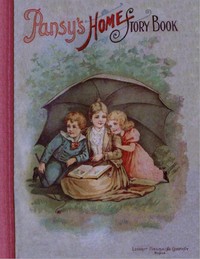
Pansy's home story book — A Closer Reading
24
5
Project Gutenberg
2025
Christian life -- Juvenile fiction; Children's stories
Readers of public-domain and historical texts
Project Gutenberg digital edition
en
Edition facts
Words: 42,310
Reading time: 184 min
Text sections: 6
Source:
Project Gutenberg record #76069
This collection of short stories for children, edited by Pansy, uses recurring domestic and natural imagery—red clover, cracked tumblers, old arm-chairs—to frame moral lessons. The structure alternates between group storytelling and focused vignettes, often moving from a child's small observation to a spiritual resolution.
Editorial Edition Score
4.7/5
★★★★★
★★★★★
Calculated from edition completeness, EPUB availability, text structure and catalogue metadata. Not a user rating.
Edition quality
The collection opens with a group of boys gathered under an old tree, each challenged to tell the story of his summer travels. This framing device—a circle of young people exchanging narratives—recurs throughout the volume, giving the book a layered, oral quality. The editor, Pansy, uses this structure to move between voices and settings, from a schoolroom decorated with fall flowers to a quiet moment of prayer between two sisters. The excerpts show a preference for concrete, homely objects: a cracked tumbler, a bunch of red clover, an old arm-chair. These items anchor the moral lessons in everyday life, making the spiritual advice feel immediate rather than abstract.
Framed Narratives and Shifting Voices
The book’s structure relies on nested storytelling. In the opening excerpt, five friends agree to share their travel stories under a tree, and Eugene Cooper begins a long account that is interrupted by the text’s own transitions. This frame reappears in stories like “Who Did It?” which is divided into three parts, and “The Three Little M’s,” also serialized. The effect is a mosaic of voices: children speak in informal, sometimes ungrammatical bursts (“I won’t have nothing to do with it”), while the narrator occasionally steps in with a gentle corrective. The shifts between first-person and third-person narration, and between dialogue and description, keep the reading experience varied. Readers move from a boy’s boast about traveling two thousand miles to a girl’s quiet gift of clover, without any single tone dominating.
Recurring Images: Clover, Cracked Tumblers, and Old Chairs
Certain images appear across different stories, linking them thematically. In one excerpt, little Kate gathers red clover from a field and carries it in her “chubby-brown hand” because she has no vase. The teacher pins the clover to her belt and wears it all day, while the richer children’s grand flowers are not mentioned again. This image of a humble, hand-held gift recurs in “A Little White Casket” and “The Old Arm-Chair,” where worn objects become vessels for affection. The cracked tumbler that Trudie scorns is echoed by the “old cracked tumbler” in another story—a detail that signals the book’s preference for the imperfect and the homemade. These objects are not merely props; they carry the emotional weight of the narrative, often prompting a character’s change of heart.
Movement Between Domestic and Natural Settings
The stories frequently shift between indoor and outdoor spaces, using these transitions to mark emotional or moral turning points. In “Their Faith,” the sisters move from a room where they notice their father’s tear to a kneeling prayer, then back to daily life where they “lost all wish for dress and gay society.” The schoolroom in the clover story is decorated with flowers, but the most meaningful gift comes from a field. The opening frame under the old tree is an outdoor gathering that leads to indoor tales. This back-and-forth creates a rhythm: the natural world offers simplicity and sincerity, while domestic interiors are where feelings are examined and resolutions are reached. The book does not privilege one setting over the other but uses the movement between them to show how faith and kindness travel from private conviction to public action.
Serialized Stories and the Rhythm of Waiting
Several stories in the collection are divided into parts, such as “Who Did It?” (three chapters) and “The Three Little M’s” (three parts). This serial structure, common in periodicals of the era, creates a rhythm of suspense and return. Readers must wait between installments, and the breaks often occur at moments of tension or decision. In the excerpts, the serialized stories are interspersed with standalone pieces, so the reading experience alternates between quick resolutions and extended arcs. The effect is a deliberate pacing: moral lessons are not delivered all at once but unfold over several sittings. This structure also mirrors the book’s theme of patience—characters learn to wait for answers to prayers, for a father’s sadness to lift, or for a misunderstanding to be resolved. The serial form reinforces the idea that growth, like reading, takes time.
Readers may find it useful to note the book’s original publication as a collection of previously published stories. The varied lengths and serialized parts mean that the volume can be read in short sessions, with each story or installment offering a complete moral vignette. Pay attention to the recurring objects—a cracked tumbler, a bunch of clover, an old arm-chair—as they often signal the emotional core of a tale. The book rewards a slow, attentive reading that follows these small details across different narratives.
Reader reflection
Your personal reading reflection
Build a private reading journal entry for this title.
Your progress
0
/
10
2
Did this book hold your interest?
3
Would you recommend this book to another reader?
4
What was the reading difficulty like?
5
How would you rate its originality?
6
How understandable was the text?
7
Which part made the strongest impression?
8
How personally connected did you feel to the book?
9
What did this book teach you most?
10