1

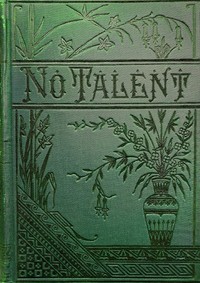
No talent, and Phil's pansies — Background and Themes
21
4
Project Gutenberg
2024
Christian life -- Juvenile fiction; Children -- Conduct of life -- Juvenile fiction; Children's stories, American
Readers of public-domain and historical texts
Project Gutenberg digital edition
en
Edition facts
Words: 33,241
Reading time: 145 min
Text sections: 3
Source:
Project Gutenberg record #74888
Two linked Sunday-school stories by Lucy Ellen Guernsey contrast a wealthy but self-doubting heiress with a poor boy who learns that small acts of kindness are seeds of good. The narratives use gardening and patchwork metaphors to explore humility, stewardship, and the value of modest efforts.
Editorial Edition Score
4.6/5
★★★★★
★★★★★
Calculated from edition completeness, EPUB availability, text structure and catalogue metadata. Not a user rating.
Edition quality
The first story, “No Talent,” opens with Amity Bogardus, a plain, wealthy girl who “thought less of herself and more of her neighbors” yet is deeply unhappy about her perceived lack of talents. Guernsey immediately undercuts the expected heiress trope—Amity is neither vain nor headed for a dramatic loss of fortune. Instead, the narrator directly addresses the reader, acknowledging that “in books” heiresses usually behave one way, but Amity is different. This self-aware narrative voice sets the tone for a pair of tales that examine inner worth versus outward status.
In the second story, “Phil’s Pansies,” the focus shifts to Phil O’Connor, a boy from Irishtown who worries he has nothing to offer. His teacher, Miss Isabel, encourages him to think of small deeds as seeds. The two stories are linked by a shared concern with how ordinary people—especially children—can contribute meaningfully to their communities, using everyday objects and actions as metaphors for spiritual growth.
Contrasting Circumstances, Shared Insecurity
Amity Bogardus owns “the prettiest and grandest place in all Brookvale” yet feels plain and talentless. Phil O’Connor lives in a “rickety and dirty” house in Irishtown, yet his worry is the same: he believes he has no seed to sow. Guernsey draws a parallel between the heiress and the poor boy that transcends class. Both are defined not by their material conditions but by their internal sense of inadequacy. The narrator’s aside about heiresses “in books” signals that Amity’s story will resist formulaic moralizing. Similarly, Phil’s concern is treated seriously, not dismissed. The text suggests that feelings of uselessness can afflict anyone, regardless of wealth, and that the remedy lies in reinterpreting one’s own small actions as valuable.
Metaphors of Making: Patchwork, Knitting, and Gardening
Guernsey structures both stories around hands-on, domestic crafts. “No Talent” includes chapters titled “Patchwork” and “Knitting,” implying that Amity’s journey involves piecing together scattered efforts into something whole. In “Phil’s Pansies,” the gardening metaphor is explicit: seeds, weeds, flowers, and fruit map onto moral choices and their consequences. Phil learns that even a “pair of old shoes” given to a boy who becomes a minister is a seed that bears a great crop. The materiality of these metaphors—fabric, yarn, soil—grounds abstract Christian lessons in tangible, everyday labor. Miss Isabel’s reflection on casting her “bread upon the shallow or muddy waters” of her students’ minds extends the agricultural imagery to teaching itself, suggesting that patience and faith are required before growth appears.
The Role of the Teacher and the Skeptical Voice
Miss Isabel, the Sunday-school teacher, is a central figure in “Phil’s Pansies.” She is wealthy herself—her father is richer than Horace Maberly’s—yet she values character over money. Horace serves as a foil: he sneers at Phil’s idealism, having been taught that “the chief good of life was money.” Miss Isabel counters by citing Scripture about giving without expecting return. The tension between Horace’s worldly pragmatism and Phil’s earnest faith is dramatized in dialogue. Notably, Miss Isabel also struggles with discouragement; she nearly quits her class because the boys seem uninterested. Phil’s attentiveness renews her resolve. Guernsey thus presents teaching as a reciprocal relationship: the student’s growth also nurtures the teacher. The narrative does not pretend that virtue comes easily—both teacher and pupil must work through doubt.
Readers attentive to the interplay between the two stories will notice how Guernsey uses parallel structures—a child’s sense of inadequacy, a mentor’s guidance, a concrete metaphor—to explore the same theme from different social vantage points. The book rewards close attention to its chapter titles, which function as miniature moral compasses. Because the excerpts are incomplete, the precise resolution of each plot remains unknown, but the patterns established suggest that both Amity and Phil will discover worth in modest, faithful actions rather than dramatic achievements.
Reader reflection
Your personal reading reflection
Build a private reading journal entry for this title.
Your progress
0
/
10
2
How much did you enjoy the reading experience?
3
How likely are you to recommend this book?
4
Did the language feel accessible?
5
Did you gain anything practical from the text?
6
How personally connected did you feel to the book?
7
Did anything about the book feel genuinely new?
8
What was its emotional impact?
9
Which lesson or insight stayed with you?
10