1

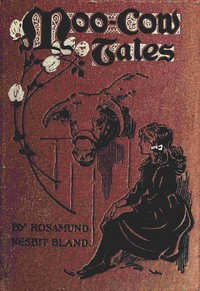
Moo cow tales — Reading Notes
6
1
Project Gutenberg
2023
Children's stories; Cows -- Juvenile fiction
Readers of public-domain and historical texts
Project Gutenberg digital edition
en
Edition facts
Words: 8,356
Reading time: 37 min
Text sections: 6
Source:
Project Gutenberg record #70341
A collection of six children's stories about cows who feel misunderstood, seek fortunes, or encounter talking flowers and rabbits. The tales follow a pattern of departure from the familiar field, a brief adventure, and a safe return home, with recurring motifs of red poppies, buttercups, and the cows' limited understanding of the world beyond their pasture.
Editorial Edition Score
4.6/5
★★★★★
★★★★★
Calculated from edition completeness, EPUB availability, text structure and catalogue metadata. Not a user rating.
Edition quality
Each of the six stories in Moo Cow Tales opens with a cow or calf who is discontented with ordinary pasture life. The first tale, “The Little Bull-Calf and the Poppy,” introduces a calf who loves red things—an unusual trait for a bovine—and longs to kiss the scarlet poppies in the neighboring cornfield. This initial departure from the expected behavior of cows sets the pattern for the collection: a protagonist feels out of place, leaves the familiar field, encounters a talking creature (a poppy, a rabbit, or another animal), and eventually returns home, often having learned a small lesson or simply having satisfied a curiosity.
Recurring Images and the Pasture as Home Base
The stories consistently return to the same pastoral imagery: fields full of buttercups and daisies, hedges, lanes, and gates. The field is the cows’ known world, a place of safety and routine. When Pansy, in “The Cow Who Went to Seek Her Fortune,” leaves her field, she immediately notices that “everything tastes much sweeter out here.” The contrast between the familiar, slightly dull pasture and the exciting but risky outside is drawn in every tale. The poppies in the first story are described as “scarlet” and “beautiful,” standing out against the yellow and white of the home field. This visual opposition—red versus yellow and white—recurs as a marker of the alluring unknown.
Movement Between Scenes: Gaps, Gates, and Crossroads
The physical movement of the cows is carefully staged. The little bull-calf finds “a gap in the hedge, just big enough for a little calf to squeeze through.” Pansy slips through a gate left open by the stable boy. Later, she and Reddy reach a crossroads where they decide to part ways. These thresholds—gaps, gates, crossroads—are the only points where the cows can leave their enclosed world. The narrator often notes the precise means of egress, as if the escape must be plausible within the farm setting. Once outside, the cows travel down lanes, through woods, and to other fields, but the journey is always short; the world beyond is never vast, only a little larger than the pasture.
Talking Flowers and Animals: The Limits of Understanding
The cows encounter creatures that speak, but the conversations reveal the cows’ limited perspective. The poppy in the first story scolds the calf for trampling corn-ears and refuses to leave the field. The rabbit in “The Cow Who Went to Seek Her Fortune” corrects Pansy’s language: “Fancy having to ask who I am!” and explains that rabbits say “in the bobbing of a tail” instead of “in the twinkling of an eye.” These moments gently mock the cows’ ignorance while also showing that the talking creatures have their own concerns. The cows never fully grasp the other creatures’ worlds; they interpret everything through their own bovine experience—for instance, Pansy and Reddy think fortunes are “some special kind of flower or leaf to eat.”
The Pattern of Departure and Safe Return
Every story follows a similar arc: a cow feels unhappy or curious, leaves the field, has a brief adventure, and returns home. The little bull-calf, after being frightened by the angry poppy, stumbles back through the hedge. Pansy, after her encounter with the rabbit, eventually finds her way back. Reddy turns back almost immediately. The narrator often steps in to reassure the reader—for example, “We won’t say any more about Reddy in this story, only I will tell you that she went a little way and then felt lonely so she turned back and got safely home.” This pattern of safe return reinforces the idea that the field is the proper place for cows, and that adventures, while tempting, are temporary. The stories do not show the cows changing fundamentally; they simply go home.
The six tales in Moo Cow Tales are best read as a sequence of variations on a theme. Each story repeats the structure of departure and return, but the details of the encounter—the talking flower, the rabbit’s correction, the misunderstanding of “fortune”—give each its own flavor. Readers may notice how the cows’ voices remain consistent: they speak politely, are easily frightened, and never fully comprehend the creatures they meet. The illustrations by E. Stuart Hardy, though not reproduced here, likely reinforce the gentle, contained world of the text.
Reader reflection
Your personal reading reflection
Build a private reading journal entry for this title.
Your progress
0
/
10
2
Did this book hold your interest?
3
How likely are you to recommend this book?
4
How easy was the book to follow?
5
Which part made the strongest impression?
6
Would you start a conversation about this book?
7
Did anything about the book feel genuinely new?
8
Do you expect to return to this book?
9
In one sentence, what did you learn?
10