1

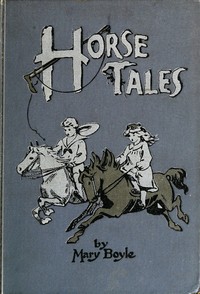
Horse Tales — Reading Companion
9
1
Project Gutenberg
2020
Children's stories; Horses -- Juvenile fiction
Readers of public-domain and historical texts
Project Gutenberg digital edition
en
Edition facts
Words: 9,568
Reading time: 42 min
Text sections: 6
Source:
Project Gutenberg record #62771
Mary Boyle's Horse Tales presents three stories told from the horses' perspectives, using colloquial dialogue and farmyard details. The opening excerpt introduces Sally, a mare left in charge, while later tales feature Blackie and Snowie, each with distinct voices and concerns.
Editorial Edition Score
4.6/5
★★★★★
★★★★★
Calculated from edition completeness, EPUB availability, text structure and catalogue metadata. Not a user rating.
Edition quality
Mary Boyle's Horse Tales opens with Sally, a mare left in charge of the farm while her master visits a sick neighbor. The narrative voice shifts into Sally's thoughts: she frets about a limping calf, a hen scratching carrots, and bees that might swarm. The dialogue is colloquial and brisk, with Sally scolding a sheep as an "old gimmer" and a donkey named Neddy replying with a "three-cornered look." This initial story establishes a pattern of animal characters speaking in distinct, informal registers, and the farm setting is evoked through specific, concrete details rather than general description.
Sally's Voice and the Farmyard World
The first tale, "Sally," introduces a horse who is both responsible and irritable. Left alone, Sally immediately worries about mishaps: the calf among the lettuces, the hen scratching carrots, the bees threatening to swarm. Her internal monologue is peppered with exclamations and rhetorical questions: "Something might go wrong while he's away, and he can see to things a lot better than me." The other animals—a long-nosed sheep, a wheezy donkey, a tinker—each have their own verbal tics. Neddy the donkey speaks with a rolling tongue and a cheeky tone, while the tinker offers to recommend Sally as a charger for a general. This opening establishes a world where animals converse freely, and the horse's perspective is central, but not omniscient: Sally cannot manage the bees, and her authority is constantly challenged.
Blackie and the New Stall
The second excerpt shifts to a different horse, Blackie, who is brought to a new stable by her master, Harry. The dialogue here is more formal and polite. Blackie is described as a "thorough little Arab" from Texas, and her new stablemate, Simon, is an older, rusty horse. Their first conversation is stilted: "Good-day, sir," Blackie begins, and Simon stammers replies. The scene is observed by a terrier named Pat, who later snuggles down and snores "stunnin'." This section introduces a contrast in tone: where Sally's world was bustling and chaotic, Blackie's is quieter, with social awkwardness between the two horses. The master's father comments on Blackie's quality, and the stable becomes a setting for tentative friendship.
Seaside Ponies and Winter Work
The third excerpt features Snowie and Bob, two ponies on the sands at Burney at the end of the summer season. Their conversation is more reflective and humorous. Snowie wonders where "seaside children" go in winter, imagining them kept in bed until warm weather returns. Bob, who carries a boy named Carrots to school across the moors, describes blizzards and snowdrifts. The ponies discuss their master Jenkins, who is selling them due to ill health. A buyer arrives and praises them as "good-tempered little creatures, and thorough game." This section introduces a seasonal cycle and economic reality: the ponies earn their living by carrying children, and their future is uncertain. The dialogue mixes practical concerns with whimsical speculation, such as Snowie's question about children's winter whereabouts.
Recurring Patterns Across the Tales
Across the three excerpts, several patterns emerge. Each story begins with a horse left to its own thoughts or placed in a new situation. The horses' voices are distinct: Sally is bossy and anxious, Blackie is polite and observant, Snowie is curious and slightly melancholy. The human characters are secondary, often appearing as masters, buyers, or tinkers who interrupt the animals' conversations. The setting shifts from a farm to a stable to a seaside, but each location is rendered through specific, sensory details: lettuces, carrots, oats, blizzards, sand. The animals' concerns are practical—food, work, companionship—but also tinged with humor and social awareness. The tales do not moralize explicitly; instead, they present a world where horses talk, worry, and form opinions about humans and each other.
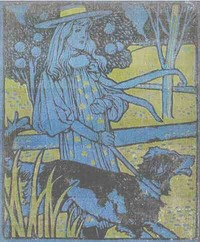
Readers approaching Horse Tales for the first time will find that each story stands alone, but together they build a consistent world where horses are the central consciousness. Pay attention to how Boyle varies the horses' speech patterns and concerns: Sally's farmyard authority, Blackie's social unease, Snowie's seasonal reflections. The illustrations by Isabel Watkin, mentioned on the title page, likely complement these characterizations. The tales are short and episodic, making them suitable for reading aloud or for young readers exploring narrative voice.
Reader reflection
How did this book work for you?
Your answers remain private and are stored only in this browser.
Your progress
0
/
10
2
How did the book work for you overall?
3
Would you recommend this book to another reader?
4
What was the reading difficulty like?
5
Did any part of the book feel personally relevant?
6
Did the book deliver what you hoped for?
7
How useful were the ideas in this book?
8
Which element worked best for you?
9
What did this book teach you most?
10