1

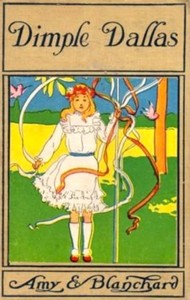
Dimple Dallas — A Closer Reading
23
5
Project Gutenberg
2025
Children's stories; Girls -- Conduct of life -- Juvenile fiction
Readers of public-domain and historical texts
Project Gutenberg digital edition
en
Edition facts
Words: 38,568
Reading time: 168 min
Text sections: 13
Source:
Project Gutenberg record #75380
This editorial note examines how the opening, middle, and later excerpts of Amy E. Blanchard's Dimple Dallas guide a first reading, focusing on the protagonist's shyness, the role of dolls in social bonding, and the shift from school to family life.
Editorial Edition Score
4.7/5
★★★★★
★★★★★
Calculated from edition completeness, EPUB availability, text structure and catalogue metadata. Not a user rating.
Edition quality
From its first chapter, Dimple Dallas establishes a central tension between a child's inner world and the demands of social performance. The opening scene places Eleanor Dallas in a schoolroom where her shyness is palpable: she speaks so low she can scarcely be heard, and a whispered remark about being “kept in” reduces her to tears. The teacher, Miss Reese, responds with kindness, excusing her from recitation and offering a private examination. This moment sets up a pattern of adult sensitivity that recurs throughout the excerpts, as Aunt Dora and Uncle Heath later provide a more relaxed environment for play and gift-giving.
Shyness and the Schoolroom
The opening excerpt hinges on Eleanor's acute self-consciousness. Blanchard conveys her distress through physical details: “trembling lips,” “downcast eyes,” and tears that “keep welling up.” The spelling words—parallel, separate, conscience—are not random; they hint at the moral and social pressures the child faces. The titter from classmates and Laura Field's whisper amplify Eleanor's misery. Miss Reese's intervention, however, signals that the adult world in this story is not uniformly harsh. The teacher's offer of a private examination after school is both a practical solution and a gesture of empathy, suggesting that the narrative will balance vulnerability with support.
Dolls as Social Currency
In the shopping chapter, dolls become a medium for friendship and emotional expression. Eleanor and Florence name their dolls—Ada, Celestine, Rubina—and treat them as companions with distinct histories. The mention of Bubbles's doll, Floridy Alabamy, whose hair was singed off by the “horrid” Donald, introduces a thread of conflict with boys and a protective instinct among the girls. The dolls also facilitate conversation: the girls discuss Bubbles's disappearance and Eleanor's relief at leaving “that Cousin Ellen family.” Through these play scenes, Blanchard shows how children process adult troubles by reenacting them in miniature, a technique that rewards close attention to the dolls' names and fates.
The Shift from School to Family
By the later excerpts, the setting has moved from the schoolroom to the domestic sphere of Aunt Dora's house. The change is marked by a different kind of anxiety: Eleanor now worries about buying Christmas gifts with only a dollar and two quarters. Uncle Heath's gentle teasing—“How many Christmas gifts do you expect this to buy?”—and his chinking of her coins introduce a practical lesson in budgeting. The list of intended recipients (parents, aunt, uncle, Rock, Florence, Bubbles, Mrs. Snyder, Miss Reese, Sylvy) shows Eleanor's expanding social world. The narrative thus shifts from the fear of public failure to the challenge of private generosity, a progression that may shape the reader's expectations for the remainder of the book.
Voice and Dialogue Patterns
Blanchard's dialogue captures the rhythms of children's speech with notable precision. Florence's exclamation, “Isn't it perfectly splendid that I have the whooping-cough, too?” and Eleanor's breathless reply, “Splendid,” reveal how children reframe misfortune as shared adventure. The whooping-cough, a serious illness, becomes a cause for celebration because it allows the friends to be together. Similarly, the exchange about boys—“Aren't boys horrid?” / “Some boys,” returned Eleanor; “Rock isn't.”—shows a nuanced view of gender relations. These conversational turns are not merely cute; they establish character and advance the theme of loyalty. Readers attuned to such details will find the story's emotional logic in its dialogue.
Illustrations as Narrative Clues
The excerpts include references to Ida Waugh's illustrations, such as “They had luncheon in the library” and “Busy over the crown for the queen to wear.” These captions suggest that the pictures do more than decorate; they highlight key moments of play and creativity. The illustration of Eleanor and Florence having luncheon with their dolls in the library reinforces the domestic freedom they enjoy at Aunt Dora's. The crown-making scene points to a May party later in the book, hinting at a ceremonial or theatrical climax. Readers of this digital edition may benefit from pausing at each illustration to consider how it condenses the chapter's emotional or plot development.
These excerpts reveal a story that moves from public embarrassment to private comfort, from school rules to family affection. The dolls, the whooping-cough, and the Christmas shopping all serve as vehicles for exploring how a child navigates relationships with adults and peers. A first-time reader might watch for how Eleanor's shyness recedes as she gains confidence through play and generosity, and how the adults—Miss Reese, Aunt Dora, Uncle Heath—continue to shape her world with a mix of discipline and warmth.
Reader reflection
How will you remember this book?
Save your reaction, strongest insight, and memorable passage.
Your progress
0
/
10
2
What was your overall reaction to the book?
3
Would you encourage someone else to read it?
4
What was the reading difficulty like?
5
Was the book easy to understand?
6
How strongly did the book affect you emotionally?
7
How strong was your personal connection to the text?
8
What did you appreciate most?
9
What did this book teach you most?
10