1

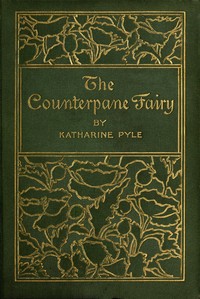
The Counterpane Fairy — Inside the Classic
19
4
Project Gutenberg
2002
Children's stories; Fairies -- Juvenile fiction
Readers of public-domain and historical texts
Project Gutenberg digital edition
en
Edition facts
Words: 31,743
Reading time: 139 min
Text sections: 11
Source:
Project Gutenberg record #3230
An editorial note on Katharine Pyle's word choices, dialogue patterns, and descriptive style in The Counterpane Fairy, based on excerpts from the opening and a later chapter.
Editorial Edition Score
4.7/5
★★★★★
★★★★★
Calculated from edition completeness, EPUB availability, text structure and catalogue metadata. Not a user rating.
Edition quality
The Counterpane Fairy opens with a sick boy, Teddy, alone in a room furnished with "gay old-fashioned India calico." Katharine Pyle establishes his vulnerability through small, concrete details: the glass of milk, the stair door left ajar, the crackling fire, and Hannah singing below. Teddy's request for a cracker is denied, and a tear trickles down his cheek. At this low point, a tiny voice speaks from the hill of his knees, introducing the fairy. Pyle's description of the fairy's entrance is economical—no fanfare, just a voice and a climb—which grounds the fantasy in the ordinary setting of a sickbed.
Dialogue as Character Marker
In the excerpts, Pyle differentiates characters through their speech patterns. Teddy's dialogue is simple and direct: "Hannah, I want to ask mamma something." Hannah's replies are soothing but firm, using endearments like "your poor mother" and appealing to Teddy's sense of being "too much of a man." Later, the mermen speak in a colloquial, almost theatrical register: "It's bad for you, Sprawley, ain't it?" and "Pooh, what do I care?" Sprawley's bravado contrasts with the mermen's collective gasps. The bears, by contrast, use exclamations and repetitions: "Why! why!" and "Oh dear! oh dear!" These vocal tics make each group—human, merman, bear—instantly recognizable.
Descriptive Economy and Sensory Detail
Pyle builds scenes with a few precise sensory cues. The sickroom is defined by the crackling fire, the gray April clouds, and the taste of milk and gruel. When Teddy ventures into the polar sea, the ice is described through action: the mermen "break off the piece he is standing on." The bear-skin disguise is revealed by a slit cut up the back, a physical detail that drives the plot. Pyle avoids lengthy landscape descriptions; instead, she lets objects and actions carry the setting. The merman's skin is stripped off "just as though it were a coat," a simile that keeps the fantastic within a child's frame of reference.
Voice and Point of View
The narration stays close to Teddy's perspective, even during his adventures. When the mermen plot to float him away, the text reports: "All the same, I don't think you'll float me off," said Teddy to himself. This interior thought is the only access to his mind; Pyle does not editorialize. The fairy's voice is introduced as "a little voice just back of the hill his knees made," a description that mirrors Teddy's physical position. The narrator occasionally uses colloquial asides—"what should he do but strip off his bear-skin"—which echo a storyteller's oral cadence. This blend of close third-person and folk-tale interjections gives the prose a dual texture: intimate and traditional.
Structure of the Fantastical Interlude
The polar sea episode follows a clear pattern: Teddy enters a strange world, encounters a threat (the mermen's plot), and uses cleverness (cutting the bear-skin) to escape. The mermen's scheme is laid out in dialogue, then foiled through action. Pyle balances danger with humor: the merman is cuffed "head over heels" and the Father Bear returns "panting and growling." The scene ends with a return to the bears' cave, where Teddy "laid himself down again between the sleeping cubs." This cyclical structure—departure, ordeal, return—mirrors the frame of Teddy's illness and recovery. The excerpts suggest that each chapter may follow a similar arc, with the Counterpane Fairy as the catalyst for these contained adventures.
Readers attentive to Pyle's craft will notice how she uses dialogue tags, repeated exclamations, and physical gestures to build character without exposition. The fairy's appearances are never explained; they simply occur when Teddy is most lonely. This restraint leaves the fantasy feeling earned rather than arbitrary. The excerpts offer a clear sense of Pyle's method: she trusts small details—a tear, a slit in a skin, a voice from a knee-hill—to carry the weight of wonder.
Reader reflection
Record your reading impressions
A brief reflection can help important ideas stay with you longer.
Your progress
0
/
10
2
What was your overall reaction to the book?
3
How likely are you to recommend this book?
4
How easy was the book to follow?
5
Did anything about the book feel genuinely new?
6
How would you describe its reading pace?
7
Did it raise ideas you would like to talk about?
8
How understandable was the text?
9
What did this book teach you most?
10