
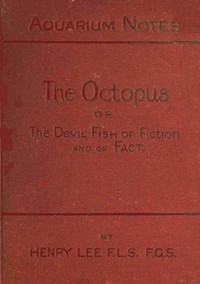
The octopus : or, The "devil-fish" of fiction and of fact by Henry Lee
The Story
So here's the basic plot: Henry Lee, a Victorian-era naturalist, sets out to separate fact from fiction when it comes to the octopus—a creature that, in his day, was basically the sea monster of choice for authors like Victor Hugo (who wrote a legendary horrifying octopus scene in Toilers of the Sea). Nobody really knew what these animals were capable of. Lee starts by describing the terrifying 'devil-fish' stories that captured the public's imagination, then slowly peels back the layers of exaggeration. He talks about real scientific observations of octopuses, their actual size, their behavior, and their physical limits. It's basically the book version of a 'myth-busting' episode: 'Can a giant octopus actually sink a ship? Let's check the evidence.'
Why You Should Read It
What grabbed me most about this book was how it lets you peek into the minds of people from 150 years ago who had no Google, no underwater cameras—just terrifying sea shanties and wooden ships. Lee is honestly like that friend who tells you to calm down about some wild rumor by calmly pointing out the facts, but he still loves a good story. He writes with a mix of seriousness and nerdy excitement—you can tell he's totally on the octopus's side, defending it from being labeled a killer. Reading this, you realize how much the myths we create shape what we see. Also, we still do that today! Is it really fair to call an octopus a 'devil' just because it looks weird and lives in the dark? Lee's book is a kind, curious look at the natural world and our own fear of what we don't understand.
Final Verdict
This book is perfect for marine biology nerds who also love spooky campfire tales, or for history lovers who want to see the very moment science and pop culture collided over an underwritten monster. It's not a heavy read—more like a quirky coffee table book for curious minds. If you liked reading about the discovery of giant squids in The Future of the Ocean's Mysteries (or just dream of diving into the unknown with live tentacles), Lee is your man from the 1800s. But if you only want big heroic sea battles with colossal defeat, you might want to stick with pirate fiction. Otherwise, in less than 300 pages, you'll fundamentally change the way you think about the little wet aliens hiding in our oceans.
This book is widely considered to be in the public domain. You do not need permission to reproduce this work.
Barbara Perez
3 days agoAs someone working in this industry, I found the insights very accurate.







George Davis
3 weeks agoThis was exactly the kind of deep dive I was searching for, the author’s unique perspective adds a fresh layer to the discussion. Thanks for making such a high-quality version available.