
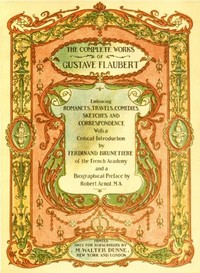
Sentimental Education; Or, The History of a Young Man. Volume 2 by Gustave Flaubert
If Volume 1 was about the dream, Volume 2 is about the hangover. We pick back up with Frédéric Moreau, now trying to build an adult life in Paris. He's got a small inheritance, big artistic ambitions, and that same old obsessive love for the married Madame Arnoux. But Paris in the 1840s is a turbulent place. As political protests erupt and the monarchy starts to crumble, Frédéric's personal world is just as chaotic. He ricochets between lovers, dabbles in politics for all the wrong reasons, and watches his friends make their own compromises with life.
The Story
This isn't a plot of grand adventures, but one of quiet failures and near-misses. Frédéric tries to be a writer, a politician, a businessman, and a devoted lover, but his heart's never really in it. He's always waiting for something better, especially a future with Madame Arnoux. The real action happens around him—the 1848 Revolution shakes Paris to its core—while Frédéric mostly watches from the sidelines, more concerned with his love life than the birth of a republic. The story follows him and his circle of friends over years, showing how time and disappointment change them all.
Why You Should Read It
Flaubert isn't judging Frédéric; he's showing us a very human flaw. How many of us have put our real lives on hold, waiting for a 'perfect' future that never comes? The genius is in the details—the awkward conversations, the bad financial bets, the way passions cool into quiet regret. It’s funny, but in a cringe-worthy way that makes you think, 'Oh, I know someone like that.' Maybe even a little bit of ourselves.
Final Verdict
Perfect for anyone who loves character studies over car chases. If you enjoyed the aimless charm of The Great Gatsby's Nick Carraway or the restless energy in Balzac's Paris, you'll find a friend in Frédéric. It's also a fascinating, ground-level view of a revolution from someone who was profoundly uninterested in being a hero. A brilliant, slow-burning portrait of wasted potential.
This book is widely considered to be in the public domain. It is available for public use and education.
Sarah Jackson
4 months agoExtremely helpful for my current research project.
Kimberly Moore
1 year agoA brilliant read that I finished in one sitting.
Emily Johnson
1 year agoThe layout is perfect for tablet and e-reader devices.
Susan Moore
9 months agoIf you're tired of surface-level information, the logic behind each conclusion is easy to follow and verify. Thanks for making such a high-quality version available.

Thomas Davis
2 years agoAs a professional in this niche, the way it challenges the status quo is both daring and well-supported. It cleared up a lot of the confusion I had previously.